
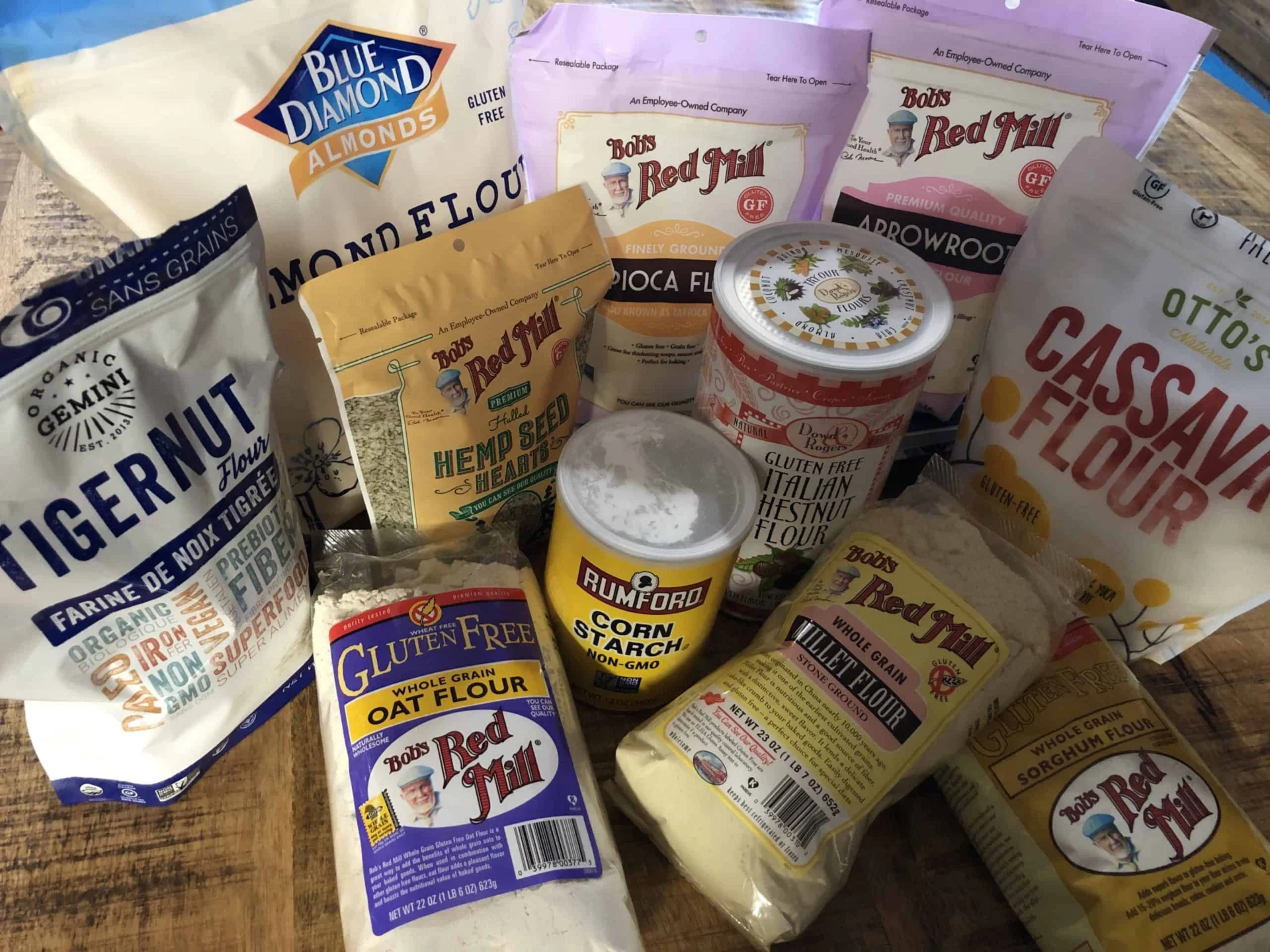
The number of gluten free flours is mind-boggling. You are probably thinking, “how many things can you possibly make flour out of?!” The answer is, a lot. The list seems to keep growing every year. I came up with over 35 flours/starches, which should be a huge help with food intolerances. On the bright side, with so many options, food is going to taste so much better again; if you find the right combinations. Here is a basic run down of the different gluten free flours.
Almond Flour – Most popular flour for Paleo diets, it has a sweet nutty flavor. It compliments cookies and baked goods very well, but gives them more of a dense consistency. It also works as a substitute for breadcrumbs.
Amaranth Flour – Has an earthy, peppery flavor, improves structure, provides binding, and tends to take flavors of other ingredients. It needs to be combined with other gluten free flours. Works great in breads and crusts.
Arrowroot Flour – Is gaining popularity since it’s a great substitute for cornstarch. The great thing about arrowroot is that it has no taste so it’s ideal for thickening sauces. Another great trick is that it works well with making anything crispy for frying. It also works great for binding baked goods.
Buckwheat Flour – What a misleading name, it has nothing to do with wheat at all. It has a strong earthy and bitter flavor, which works great for breads. As always, with these types of flour, it’s best when used with other gluten free flours and not by itself.
Brown Rice Flour – It’s a bit heavier than white rice flour, but super versatile for all your baked goods.
Banana Flour – Baked green banana flour has a mild, neutral flavor, which works for sweet and savory dishes. A powerful new gut health ingredient, since it has resistant starch and is also diabetic friendly.
Coconut Flour – Another popular flour since its low in carbohydrates and high in fiber. One of the go-to flours for Paleo and Keto diets. However, it is very dense and also a very absorbent flour. You will need extra liquids and eggs.
Cashew Flour – Not very common yet and costly, but when used as a substitute for bread crumbs in meatloaf, it is fantastic.
Chestnut Flour – Called the grain grown on trees, and Tuscany’s secret ingredient which works very well for any baked goods or dishes.
Cassava Flour – Since it’s also nut free, it’s a great substitute for nut allergies. Sometimes Cassava is interchangeable with Tapioca but it is not the same thing. Both function very differently with baking and your digestive system.
Cornstarch – This “flour” was probably always in your pantry, mostly used to thicken sauces. It’s a bland ingredient that lightens many gluten free flour blends.
Corn Flour – Mainly used in Mexican recipes, especially for tortillas. Anything corn related is not used in the Paleo diet.
Cornmeal – Another corn version, used in many baked goods. If it’s to coarse it makes the baked items gritty.
Chickpea Flour – Also known as Garbanzo flour. Naturally dense with a nutty flavor and slightly grainy texture. You find it in many Mediterranean recipes.
Chia Flour – Makes dough stretchy, it is a great egg substitute if you are intolerant to eggs.
Flaxseed Flour – Nutty, strong flavor, it provides a spring to baked goods. Substituting flax for eggs or fat in recipes, it may make the food chewy and flat.
Glucomannan – Natural Prebiotic also known as konjac flour. Like everything else it has its pros and cons, but for cooking purposes it works as a thickener for sauces. Since it has no carbs or calories, it’s a popular choice for low carb diets.
Guar Gum – Works very well as a thickener for breads or pizza dough. Generally, you will not use more than one teaspoon of Guar Gum for each cup of gluten free flour in your blend.
Hemp Flour – Very nutritious and packed with vitamins and minerals, protein and fiber, but very dense. Has an earthy and nutty taste, sometimes carries a plant like taste into dishes. General rule, use 25% of it with other gluten free flours for best results.
Hazelnut Flour – Very versatile and Europeans favorite flour to use in baked goods. It’s highly nutritious and adds a subtle nutty and buttery taste to any dish.
Millet Flour – Light, mildly sweet flavor, and very easy to digest. Works well in yeast breads.
Manioc Flour – Staple item in Brazil, works great in some desserts.
Oat Flour – Make sure to specifically buy only gluten free, since oats are the most cross contaminated food with gluten. Oat flour works in any dish, however in yeast breads it requires extra yeast to make the dough rise.
Potato Flour – Should not be confused with Potato starch. Strong flavor and is heavy, use sparingly in recipes.
Potato Starch – Has a weak flavor, retains moisture, and provides light texture in baked goods, also used as a thickener.
Pecan Flour – Works as any other nut flour. I replaced hazelnut flour with Pecan in the past since I was intolerant to hazelnut.
Psyllium Husk – Can be used as a thickener for sauces. It only requires a very small amount.
Quinoa Flour – Depending on the person, it can have a bitter taste. So far, I have not made any dishes including Quinoa.
Sorghum Flour – Light in color and texture but a fairly dense flour. Works well in flour blends for breads.
Soy Flour – Since it is a flour as well, I will list it, but it’s very perishable, prone to rancidity, and soy is just a bad option all the way around. It has a beany flavor that most people don’t like in baked goods anyway.
Tapioca Flour – It’s a highly versatile flour in any dish, it works as an excellent thickener.
Teff Flour – Light colors have mild flavors, while dark colors have an earthier taste. Due to strong flavors it should be used in small amounts.
Tigernut Flour – Once again a misleading name, but has nothing in common with nuts it’s, actually a root. Which makes it a great substitute for nut allergies since it does have a nutty flavor. Works best in savory dishes.
White Rice Flour – Has a very neutral taste and can be used in any dish. Rice is the least common food intolerance, but lucky me, there was a time in my life I was unable to eat rice. Leaky gut, sucks!
Walnut Flour – Just like pecan or hazelnut, use what you prefer or can tolerate.
Xanthan Gum – It may cause digestive issues in some people when used in large amounts. I use it in some dough to make it less brittle. Also works as a thickener.
Many flours on this list are from the same root/plant but still work very differently in gluten free baking and cooking. Using cassava flour in a dish and just simply replacing it with potato flour will not give you the same results. The same goes for the different nut flours, they have different densities and flavors. I like to think of gluten free baking as a science project, every little change in flour or starch creates a different result.
My mission is to make gluten free foods taste like the everyday foods you are use to. So far not all creations have been successful, but most of them are, and they just blow people’s minds. Those will be the recipes I share on this blog. A lot of people that have been invited to eat in my house never knew they were eating gluten free or dairy free (two strict requirements in my house for my husband and daughter), which is a success in my book.
Sure, there are now plenty of packaged, gluten free items in the market, which are great if you are in a pinch, but nothing beats homemade dishes. Quiet honestly, some gluten free items sold in the store are so bad, I think the cardboard box it came in would taste better. We have eaten more than enough of them during our journey to know. It blows my mind what people are willing to eat and spend their money on. With just a little effort in the kitchen, you will be amazed how great gluten free, dairy free, etc. can actually taste, and I’m here to help you through this experience.